
What is an adjective?"
Simply put adjectives are descriptive words. Adjectives are used to describe or give information about things, ideas and people: nouns or pronouns.
For Example:-
The grey dog barked. (The adjective grey describes the noun "dog".)
The most common question an adjective might answer is "What kind of ...?"
The good news is that in English the form of an adjective does not change, once you have learnt it that's it and it does not matter if the noun being described is male or female, singular or plural, subject or object. Yay!
Some adjectives give us factual information about the noun - age, size colour etc (fact adjectives - can't be argued with).
Some adjectives show what somebody thinks about something or somebody - nice, horrid, beautiful etc (opinion adjectives - not everyone may agree).
If you are asked questions with which, whose, what kind, or how many, you need an adjective to be able to answer.
There are different types of adjectives in the English language:
- Numeric: six, one hundred and one etc.
- Quantitative: more, all, some, half, more than enough etc.
- Qualitative: colour, size, smell etc.
- Possessive: my, his, their, your etc.
- Interrogative: which, whose, what etc.
- Demonstrative: this, that, those, these etc.
!Note - The articles a, an, and the are a special kind of adjective called articles, and the possessives my, our, your, and their are sometimes known as possessive adjectives.
Colour
Adjectives can be used to describe colour.

blue, red, green, brown, yellow, black, white, etc.
For Example:
- "The blue bag." or "The blue bags".
Opinion
Adjectives can be used to give your opinion about something.


good, pretty, right, wrong, funny, light, happy, sad, full, soft, hard etc.
For Example:
- He was a silly boy. / She was a silly girl.
Size
Adjectives can be used to describe size.

big, small, little, long, tall, short, same as, etc.
For Example:
- "The big man." or "The big woman".
Age
Adjectives can be used to describe age.


For Example:
- "He was an old man." or "She was an old woman."
Shape
Adjectives can be used to describe shape.
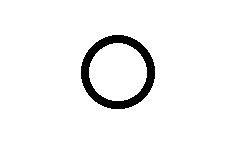
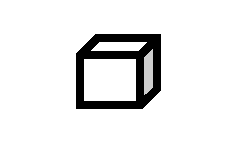
round, circular, triangular, rectangular, square, oval, etc.
For Example:
- "It was a square box." or "They were square boxes."
Origin
Adjectives can be used to describe origin.
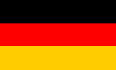
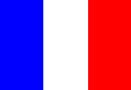
For Example:-
- "It was a German flag." or "They were German flags."
Material
Adjectives can be used to identify the material something is made of.
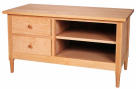
- "A wooden cupboard." or "Wooden cupboards."
!Note - In English we often change nouns into adjectives.
For Example: glass - a glass vase / metal - a metal tray etc.
Distance
Adjectives can be used to describe distance.
l -- o -- n -- g / short
long, short, far, around, start, high, low, etc.
For Example:
- "She went for a long walk." or "They went for lots of long walks."
Temperature
Adjectives can be used to describe temperature.
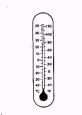
cold, warm, hot, cool, etc.
For Example:
- "It was a hot day" or "We eat ice cream on hot days."
Time
Adjectives can be used to describe time.


late, early, bed, nap, dinner, lunch, day, morning, night, etc.
For Example:
- "She had an early start."
Purpose
Adjectives can be used to describe purpose. (These adjectives often end with "-ing".)
For Example:
- "She gave them a sleeping bag." or "She gave them sleeping bags."
!Note - Have you noticed how the adjective stays the same, whether it is describing a masculine, feminine, singular or plural noun? Nice huh?
When using more than one adjective to modify a noun, the adjectives may be separated by a conjunction (and) or by commas (,).
For Example:
- "Her hair was long and blonde." or "She had long, blonde hair."
More examples:
| Adjective | Pretty | Serious | Fast | Quiet |
|---|---|---|---|---|
| For Example: | She is a pretty girl. | He was a serious boy. | It could be a fast car. | They were quiet children. |
!Note - Adjectives that go immediately before the noun are called attributive adjectives.
Adjectives can also be used after some verbs. They do not describe the verb, adverbs do that.
Adjectives after a verb describe the subject of the verb (usually a noun or pronoun).
For Example:
- "Lynne looks tired."
There is also the adjective used to, which is such a beast that it gets its own section - Used To.